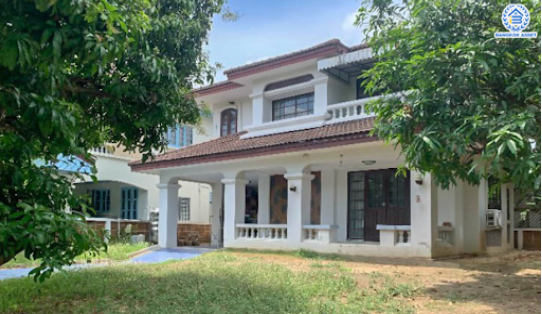
Daylight makes arrival look simple. The gate is visible, the paving is easy to read, and the route from car to door feels obvious. After sunset, the same sequence depends on smaller cues: where a driver pauses, how the gate moves, which surfaces catch light, what can be seen from the street, and where a visitor waits. An evening visit cannot establish safety or security, but it can reveal how the entrance behaves when sightlines shorten and household attention is divided.
Repeat the Arrival From the Street
Approach the property as a resident would after work. Notice when the house number becomes readable, whether the vehicle must stop in the traffic lane while the gate opens, and how sharply the turn enters the plot. If the gate is manual, consider where a driver can stand without losing awareness of the street or leaving the vehicle awkwardly positioned. If it is powered, observe its movement and ask how access works during a power interruption without assuming that a demonstration proves long-term reliability.
Follow the Last Few Meters on Foot
Once the vehicle is parked, carry an imaginary load: a laptop bag, groceries, or a sleeping child. Look for changes in level, drainage channels, narrow spaces beside a car, and doorways that require a hand to be freed. Exterior lighting should help the eye move from one zone to the next rather than create a bright island surrounded by darkness. Glare can be as disruptive as insufficient light, especially where a fitting faces the arriving person directly.
Read Privacy at the Threshold
Evening lighting can reveal interiors that feel private during the day. Stand where a delivery rider, neighbor, or guest might wait and note which rooms become visible when the main door opens. Curtains can change a view, but the relationship between gate, entrance, windows, and shared living areas remains. The concern is not to eliminate every sightline. It is to understand whether ordinary arrivals expose a dining table, staircase, or family room more than the household would find comfortable.
Comparing detached homes in Nonthaburi with practical evening access is more useful when the entry sequence is treated as a chain rather than a single feature. Gate position, parking order, the walking route, lighting transitions, and the front door all influence one another, and a weakness in one link can shape the entire arrival.
Include Visitors, Deliveries, and Late Returns
Residents are not the only people who use the threshold. Determine where a visitor can wait without blocking a vehicle and whether conversation at the gate carries directly into bedrooms or shared rooms. A delivery may arrive while a car is entering, creating two movements in the same narrow space. Consider where parcels can be handed over during rain and whether the resident must open the main gate fully for a minor exchange.
Late returns introduce a different concern: disturbance. Listen to the sounds produced by the gate, tires on paving, footsteps, doors, and keys. The purpose is not an acoustic diagnosis, but an understanding of which bedrooms or neighboring edges sit closest to the activity. A household with varied schedules may value an arrival route that does not require lights and movement beside sleeping rooms.
Record Conditions, Not Reassurance
One evening has only one set of conditions. Note which lights were already on, whether vehicles were present, what the weather was like, and which questions remain unanswered. Avoid translating a bright entrance into a security claim or a quiet street into a permanent promise. Exterior equipment, access control, and electrical systems may warrant documentary checks or specialist advice beyond what a visit can provide.
The front gate is where public movement becomes a private routine. Reading it after sunset brings attention to transitions that daylight smooths over: stopping, opening, turning, carrying, waiting, and closing the home behind you. A convincing entrance is not one that stages the most dramatic welcome, but one whose evening sequence remains legible when hands are full, schedules are late, and the household simply wants to come inside.